
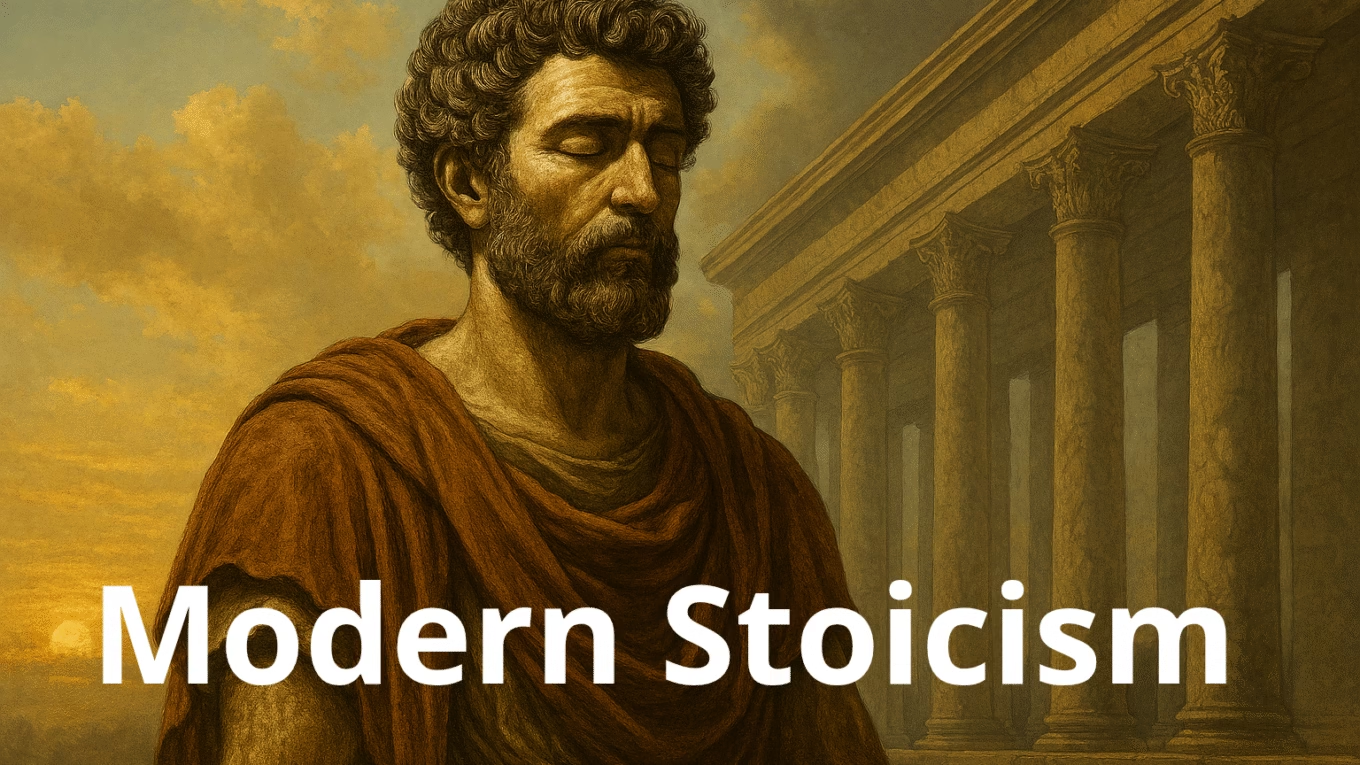
Modern Stoicism: The Art of Staying Strong in Uncertain Times
Why Stoicism Is More Relevant Than Ever
We live in a world that never sleeps. Notifications pop up every second, deadlines pile up, and bad news spreads instantly. No wonder so many people feel overwhelmed and anxious.
That’s exactly why modern Stoicism has become so appealing. This ancient philosophy, rooted in the teachings of Marcus Aurelius, Seneca, and Epictetus, offers timeless wisdom for today’s fast-paced world. It’s not about suppressing emotions, but about learning how to respond with clarity, resilience, and purpose — skills we need now more than ever.
What Is Stoicism?
Stoicism didn’t emerge in quiet classrooms but in the middle of real-life struggles. Zeno of Citium, its founder, lost everything in a shipwreck and turned tragedy into wisdom. Later, three great thinkers carried the torch:
- Seneca, the political advisor who wrote about serenity under pressure.
- Epictetus, born a slave, who taught that true freedom lives in the mind.
- Marcus Aurelius, the emperor who ruled during wars and plagues while writing Meditations, a personal guide on how to be a better human.
At its core, Stoicism is simple: you can’t control what happens, but you can control how you respond.
Modern Stoicism Principles for Daily Life
Knowing modern Stoicism exists is inspiring, but what really matters is how it can change your life today. These principles aren’t abstract theories — they’re practical guides for everyday challenges like traffic, criticism, loss, and uncertainty.
1. Focus on What You Can Control
You can’t control traffic, but you can choose to listen to music. You can’t control other people’s opinions, but you can act with integrity.
👉 This simple shift reduces anxiety and increases focus.
2. Practice Voluntary Discomfort
Seneca slept on the floor to prepare for hard times. Today, you can try a cold shower, intermittent fasting, or a digital detox.
👉 Small discomforts strengthen the mind for life’s unexpected challenges.
3. Remember Death (Memento Mori)
It may sound dark, but reflecting on mortality is actually an invitation to live better. Marcus Aurelius reminded himself daily that life is short.
👉 When you accept that time is finite, you stop postponing what truly matters.
4. Value Virtue Above All
For the Stoics, wealth and fame were indifferent. What mattered was living according to values.
👉 In modern life, this means making choices aligned with who you want to be, not with what others expect.
Modern Stoicism Tools for Everyday Life
Knowing modern Stoicism can transform your mindset is powerful. But philosophy alone doesn’t change anything unless it’s practiced. The Stoics believed wisdom only mattered when applied to daily life — in how you wake up, handle setbacks, or end your day.
Think of it like training a muscle: small daily practices build mental strength so you’re ready when bigger challenges come.
Here are some tools you can start using today:
📝 Journaling: In the morning, ask “What can I control today?” At night, “How did I respond to challenges?”
🧘 Negative visualization: Imagine losing something you value. It increases gratitude and reduces attachment.
⏳ Time awareness: Seneca said, “It’s not that we have a short time to live, but that we waste much of it.”
📚 Daily reading: A single line from Marcus Aurelius can anchor your mindset for the day.
🔄 Reframing obstacles: Instead of “This blocked me,” ask “How can I use this as a path forward?”
🧘 Take the Next Step
Enjoyed these practices? To complement Stoicism with a routine that calms the mind and sharpens focus, we created our e-book “Meditation for Beginners.” Inside, you’ll find simple techniques to start today — even if you’ve never meditated before.
👉 Get your copy here and discover how meditation and Stoicism together can help you live with balance.
Modern Stoicism and Science
The Stoics didn’t have brain scans, but they knew the mind could be trained. Today, science confirms it. When you practice modern Stoicism — pausing before reacting, journaling, or accepting what’s outside your control — you’re teaching your brain to quiet the panic alarm and give more power to reason.
When you practice Stoicism — pausing before reacting, writing about your emotions, or accepting what’s outside your control — you’re teaching your brain to quiet the panic alarm and give more power to the voice of reason.
In practice, this means:
- Fewer emotional outbursts.
- More clarity under pressure.
- The ability to stay focused in stressful situations.
- A greater sense of balance and resilience.
A study published in Cognitive Therapy and Research found that Stoic-based training significantly reduced negative thinking and increased resilience in participants who practiced simple exercises like journaling and negative visualization. You can read more about it here.
What the Stoics called “mastering yourself,” science now calls training your brain to respond instead of react.
Why Stoicism Feels So Timely
If this ancient philosophy is trending again, it’s no coincidence. It speaks directly to today’s struggles:
🌐 In the digital age: it helps manage overstimulation and social comparison.
💼 In economic uncertainty: it teaches you to focus on what you can control.
🧠 In mental health: it offers practical tools against stress and anxiety.
🎯 In the search for purpose: it puts values and character back at the center of life.
How to Start Today
Reading about Stoicism is inspiring, but transformation comes from practice. The good news? It doesn’t have to be complicated. Stoicism begins with small steps that fit easily into your day.
Here are a few to try:
1. Pick a Stoic quote and use it as your daily mantra.
2. When facing a problem, ask: “Is this within my control?”
3. Try one small voluntary discomfort each week.
4. Write a short reflection on your reactions every evening.
5. Read one page of Meditations or Letters from a Stoic before bed.
👉 Want to go deeper? Explore our article on The Science of Meditation: How It Rewires Your Brain and Boosts Your Health to see how meditation and Stoicism together can transform your mind
Conclusion
Modern Stoicism isn’t about suppressing emotions — it’s about not being enslaved by them. It’s a philosophy of action, meant to be lived day by day.
In a world that pushes us to react impulsively, Stoicism invites us to respond with calm, clarity, and virtue.
Perhaps in uncertain times, the oldest wisdom is exactly what we need most.
📘 Want to Go Deeper?
If you enjoyed this article and want to take the next step, we created an exclusive e-book: “Meditation for Beginners.” It’s packed with simple, accessible techniques to help you start meditating today — even if you’ve never tried it before.
👉 Click here to get your copy and discover how meditation can be the bridge between Stoic philosophy and a calmer, more focused life.