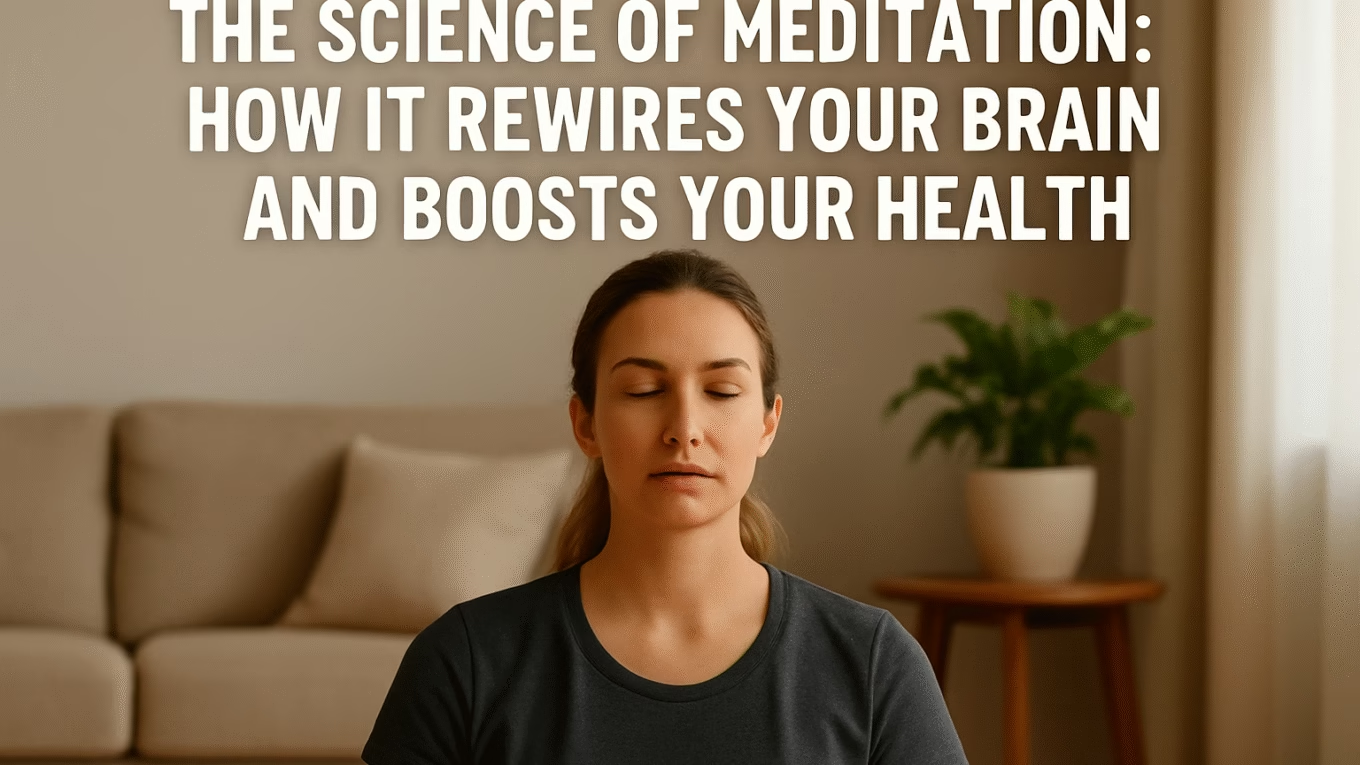
The Science of Meditation: How It Rewires Your Brain and Boosts Your Health
Meditation has evolved from an Eastern spiritual tradition to a global scientific phenomenon. Today, the science of meditation reveals something extraordinary: it doesn’t just calm the mind—it physically rewires your brain. Backed by research from Harvard, Stanford, and MIT, this article uncovers how meditation transforms your brain—and how you can use it to upgrade your life.
Neuroplasticity: How Meditation Reshapes Your Brain
Neuroplasticity—the brain’s ability to reorganize itself—is the key. MRI studies show that regular meditators develop:
- Increased gray matter in the hippocampus (memory) and prefrontal cortex (decision-making).
- A smaller amygdala (fear center), as proven in a Harvard University study after 16 weeks of practice.
- A stronger corpus callosum, enhancing communication between brain hemispheres for sharper focus.
A groundbreaking study from Harvard Medical School (Hölzel et al., 2011) revealed that:
- Just 8 weeks of mindfulness meditation
- Increases gray matter in the hippocampus (memory) and cingulate cortex (self-control)
- Shrinks the amygdala (fear and stress center) by 19.2%
This proves your brain can transform – and we’ll show you how.
Source: Mindfulness practice leads to increases in regional brain gray matter density (Published in Psychiatry Research: Neuroimaging)
“Meditation is like weightlifting for the brain.” — Dr. Sara Lazar, Harvard neuroscientist.
Comparing Techniques: Which Meditation Works Best for You?
1. Mindfulness Meditation
- How it works: Focus on breath/sensations, observing thoughts without judgment.
- Brain effect: Activates the default mode network (DMN), reducing mind-wandering.
- Landmark study: 8 weeks of mindfulness reduced anxiety by 39% (Journal of Clinical Psychiatry).
2. Transcendental Meditation (TM)
- How it works: Uses mantras to achieve a state of “restful alertness.”
- Brain effect: Deep theta waves, similar to REM sleep—promoting cellular repair.
- Key finding: 48% lower risk of heart disease (American Heart Association).
3. Loving-Kindness Meditation
- How it works: Cultivates compassion through phrases like “May you be happy.”
- Brain effect: Releases oxytocin + activates the orbitofrontal cortex (positive emotions).
Other Techniques:
- Zazen (Zen): Immobile posture—strengthens the insular cortex (self-awareness).
- Yoga Nidra: “Wakeful sleep”—boosts GABA by 27% (anxiety relief).
Science-Backed Benefits
Anxiety & Depression Relief
The MBSR (Mindfulness-Based Stress Reduction) program at UMass:
- 86% of participants reduced panic symptoms in 8 weeks.
- Effects comparable to antidepressants (Nature Human Behaviour).
Focus & Productivity
- Google employees who meditated showed 120% improved focus on complex tasks.
- U.S. schools using mindfulness saw 13% higher math scores (Journal of Cognitive Enhancement).
Brain Protection
- Meditators over 50 have a prefrontal cortex 7 years “younger” (UCLA).
- 35% lower Alzheimer’s risk (Journal of Alzheimer’s Disease).
Getting Started with the Science of Meditation
- Minimum dose: 5 minutes/day (measurable effects in 4 weeks).
- Top app: Headspace (backed by Oxford University research).
- Neuro-checklist:
- Upright posture (activates brainstem)
- Nasal breathing (stimulates vagus nerve)
- Distraction-free space (prevents cortisol spikes)
💡 Want to explore more natural techniques to calm your mind and reduce stress?
Check out our full guide: Your Mind Deserves Peace – The Natural Way to Get There.
It reveals simple, science-backed rituals that amplify the benefits of meditation—even on your busiest days.
Conclusion: Your Brain Is a Work in Progress
Meditation goes beyond temporary relaxation—it reshapes brain structures tied to stress, focus, and aging. As Dr. Richard Davidson (University of Wisconsin) says:
“The mind is the last malleable biological system—and meditation is its upgrade tool.”
Try it now: Sit for 90 seconds, observe your breath, and affirm: “This is my brain under construction.”